Purpose-built silicon, systems and software. One deployment architecture that scales from test to production through a proven global ecosystem.
Purpose-built silicon the open market deploys to encode video at scale economically.
The control plane to convert VPU silicon into a manageable platform.
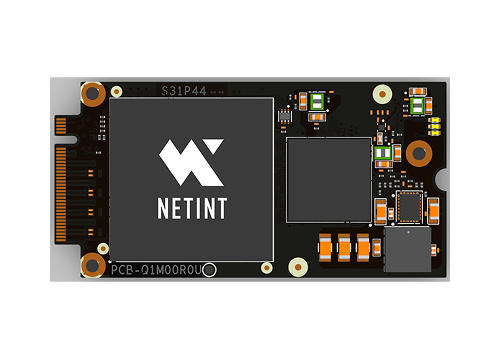
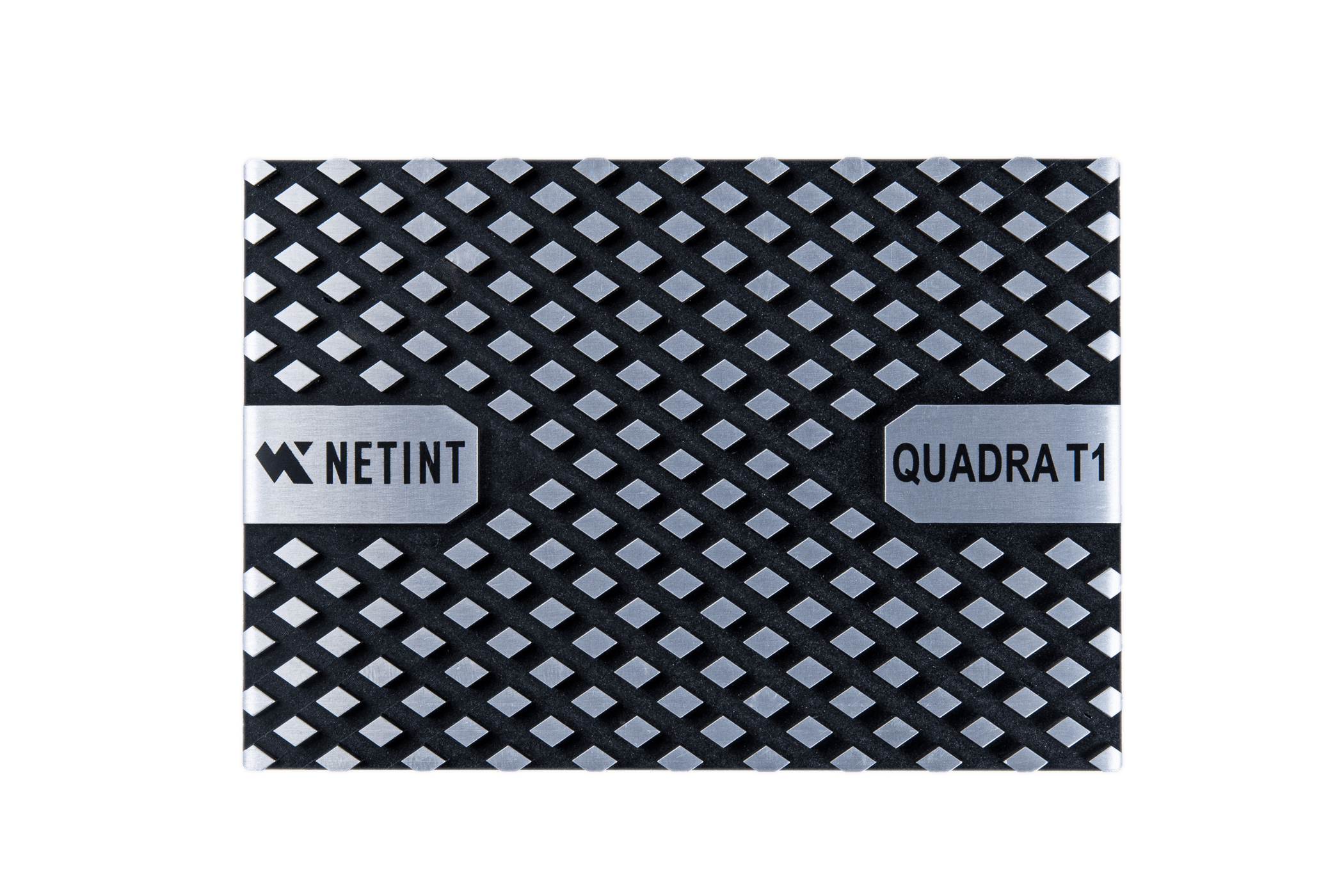
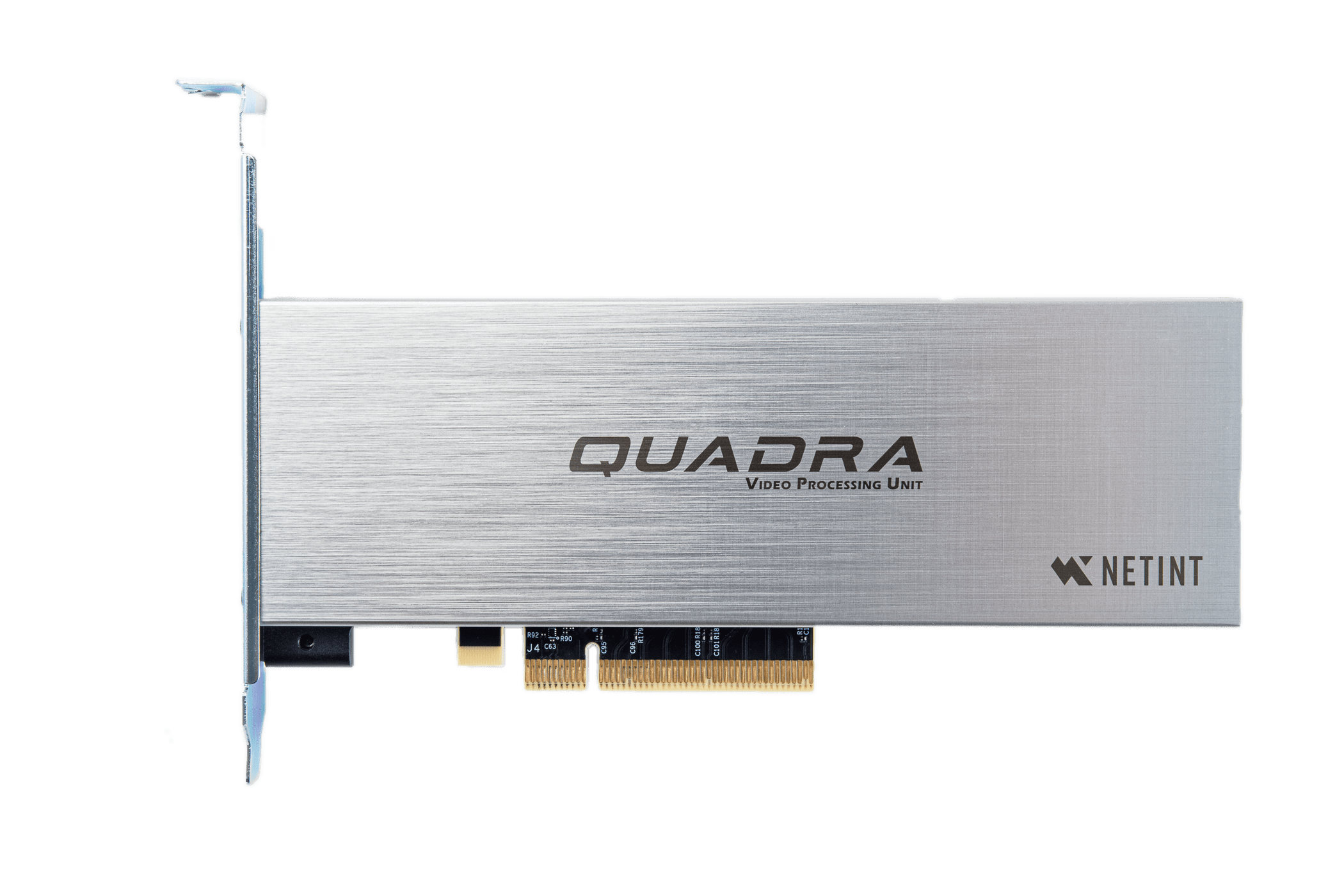
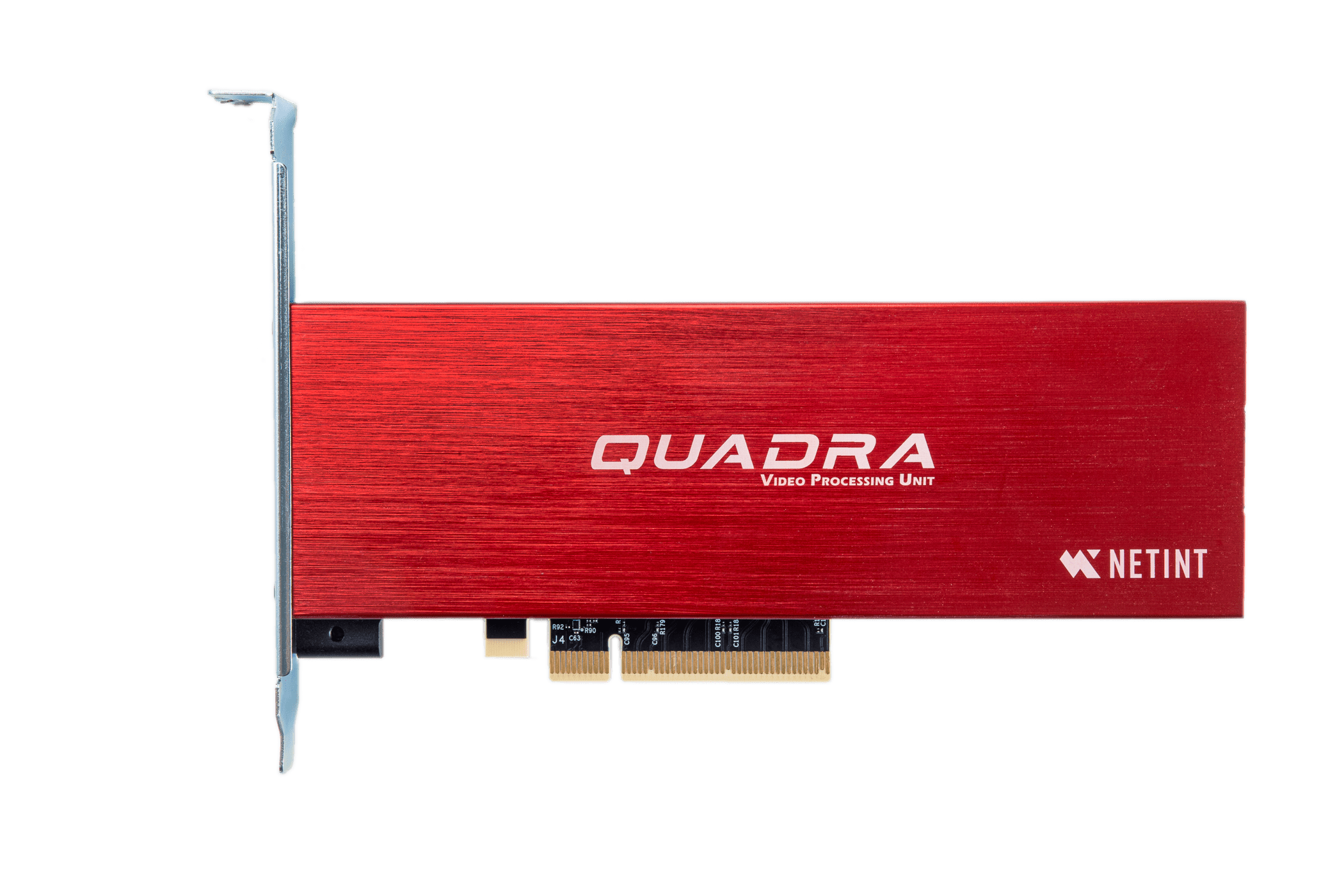
Four form factors. One silicon architecture. Built for encoding streams.
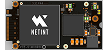
Choose for edge or space-constrained deployments.
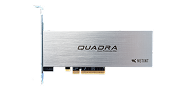
Choose for standard scale-out data center deployments.
Choose when power, thermals or tuning matter most.
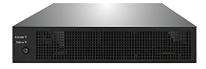
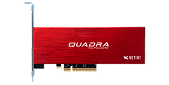
Choose this dual-chip VPU when density and cost per stream are the priority.
![]() |
![]() |
![]() |
![]() | ||
| Quadra T1M | Quadra T1U | Quadra T1A | Quadra T2A | ||
| Built for | Embedded systems and edge boxes. | Data center servers with U.2 drive bays. | Any server with a standard PCIe slot. | Any server requiring highest stream count per PCIe slot. | |
|---|---|---|---|---|---|
| Form factor | M.2 module | U.2 drive | PCIe add-in card | PCIe add-in card | |
| Host interface | PCIe 3.0 x4 | PCIe 4.0 x4 | PCIe 4.0 x4 | PCIe 4.0 x4x4 | |
| VPU chips | 1 | 1 | 1 | 2 | |
| Power | 8–10 W | 17 W | 20 W | 40 W (2 chips) | |
| Encode streams | 1080p30 | 20 | 32 | 32 | 64 |
| 4Kp30 | 5 | 8 | 8 | 16 | |
| Decode streams | 1080p30 | 25 | 48 | 48 | 96 |
| 4Kp30 | 6 | 12 | 12 | 24 | |
| Codecs | Encode | H.264, HEVC, AV1, JPEG. 8-bit and 10-bit. | |||
| Decode | H.264, HEVC, VP9, JPEG | ||||
| Scan type | Native | Progressive | |||
| Interlaced | (CPU deinterlacing only) | ||||
| AI compute | None | 15 TOPS | 18 TOPS | 36 TOPS | |
| Server compatibility | Quadra Mini Server | All Quadra Servers | 1RU Quadra Video Server | 1RU Quadra Video Server | |
| Quadra T1M Specs > | Quadra T1U Specs > | Quadra T1A Specs > | Quadra T2A Specs > | ||
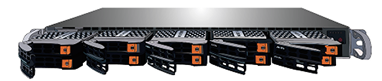
Two server configurations. Choose by density or deployment setting.
![]() |
![]() | ||
| Quadra Mini Server | Quadra Video Server | ||
| Built for | Edge sites and SDI contribution. | Data center transcoding on an x86 host. | |
|---|---|---|---|
| Form factor | 1RU Half rack | 1RU | |
| CPU | Intel 13th Gen i7 | AMD EPYC | |
| VPUs installed | 1 × Quadra T1M | 10 × Quadra T1U | |
| Video input | SDI capture card | Network streams | |
| Power | ~138 W | ~500 W | |
| Encode streams | 1080p30 | 20 | 320 |
| 4Kp30 | 5 | 80 | |
| 8Kp30 | Not rated | 20 | |
| Decode streams | 1080p30 | 25 | 480 |
| 4Kp30 | 6 | 120 | |
| 8Kp30 | Not rated | 30 | |
| Codecs | Encode | H.264, HEVC, AV1, JPEG. 8-bit and 10-bit. | |
| Decode | H.264, HEVC, VP9, JPEG | ||
| Scan type | Native | Progressive | |
| Interlaced source | (CPU deinterlacing only) | ||
| AI compute | None | 150 TOPS | |
| Software | Bitstreams preloaded. Requires licence to activate. | ||
| Quadra Mini Server Specs > | Quadra Video Server Specs > | ||

The one variable that changes is the compute layer. Everything upstream and downstream remains as is.
The VPU slots into the encode layout. Ingest, orchestration and delivery paths are unchanged.
The buying decision and the technical decision. Both need answers before a deployment begins.
A: Quadra VPUs are purpose-built to handle video encoding and decoding at sustained scale. They replace CPU- or GPU-based video workloads where throughput, power efficiency, and operational predictability are limiting factors.
A: No. Quadra VPUs replace CPU or GPU resources only for video processing tasks. General compute, orchestration, AI training, and graphics workloads remain unchanged.
A: No. Quadra VPUs are fixed-function video processors. They are designed exclusively for encoding, decoding, and video-adjacent processing—not general compute or model training.
A: No. VPU adoption is a compute substitution decision, not a platform commitment. It affects how video workloads are processed—not how applications, data, or cloud strategy are structured.
A: No. VPUs integrate into standard video frameworks and existing infrastructure. Pipelines, orchestration, and monitoring remain owned by your team, and rollback paths remain intact.
A: Deployment is incremental and reversible. If benchmarks or production behavior do not meet expectations, traffic can be shifted back to existing CPU or GPU paths without disruption.
The Deployment Playbook is how the converging companies got here. Built for streams.